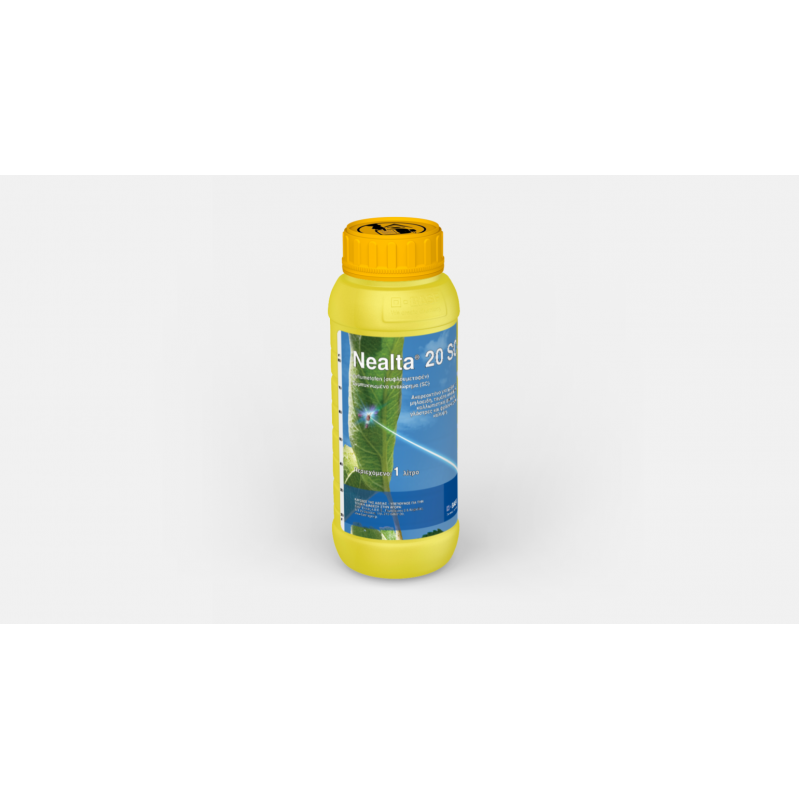
Nealta® 20 SC – Key Benefits and Usage Notes
- Ideal for Integrated Mite Management Programs
Nealta® 20 SC is compatible with integrated pest management (IPM) strategies for mite control. According to official agricultural guidelines, no adverse effects are expected on beneficial organisms such as Typhlodromus pyri, Euseius finlandicus, Kampimodromus aberrans, Aphidius rhopalosiphi, Chrysoperla carnea, Orius strigicollis, Amblyseius cucumeris, and Amblyseius californicus. - Rainfastness
The efficacy of Nealta® 20 SC is not reduced after drying on foliage, even if rainfall or dew follows. However, application is not recommended if rain is expected within 1 hour of spraying. - Ornamentals
Before using Nealta® 20 SC on ornamental plants, a small-scale test application is advised to ensure crop safety.
Resistance Management
- Always apply Nealta® 20 SC in rotation with acaricides from different chemical groups with distinct modes of action.
- Follow local IPM guidelines and economic thresholds for each mite species.
- Apply at recommended rates and intervals, ensuring full coverage for maximum efficacy.
- Calibrate spraying equipment to ensure even and thorough coverage of foliage.
- Use proper application techniques to maximize performance. Poor applications may allow surviving mites to rebuild populations, increase selection pressure, and potentially lead to resistance development.
- Perform regular monitoring of target pest populations to detect any early signs of reduced sensitivity to the product.
Re-entry Instructions
Do not enter the treated area until the spray has completely dried on plant surfaces. If entry is required immediately after spraying, workers must wear appropriate protective clothing (long pants, long-sleeved shirt) and gloves.